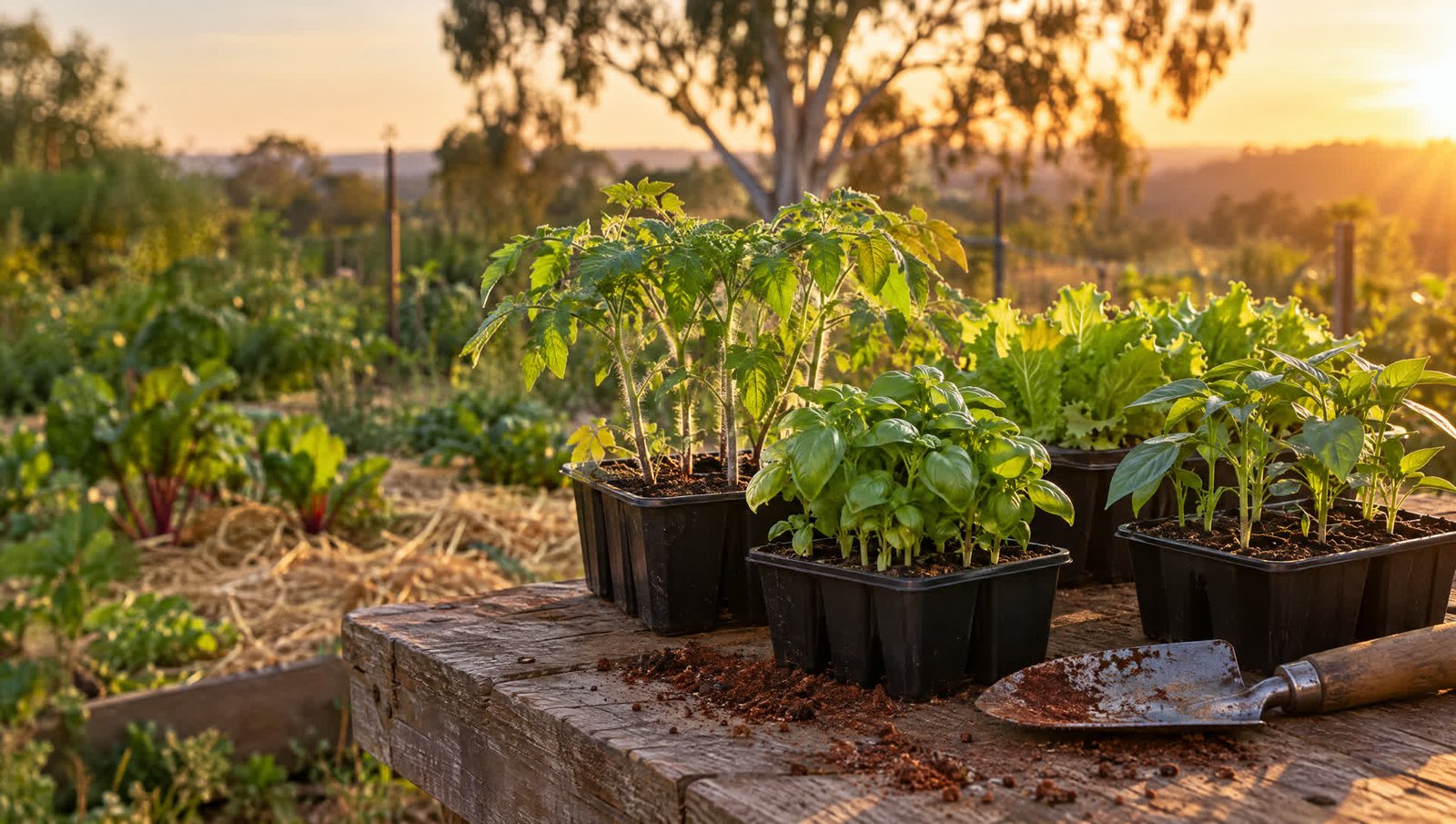
Summer cropPlant Oct to Nov
Tomatoes
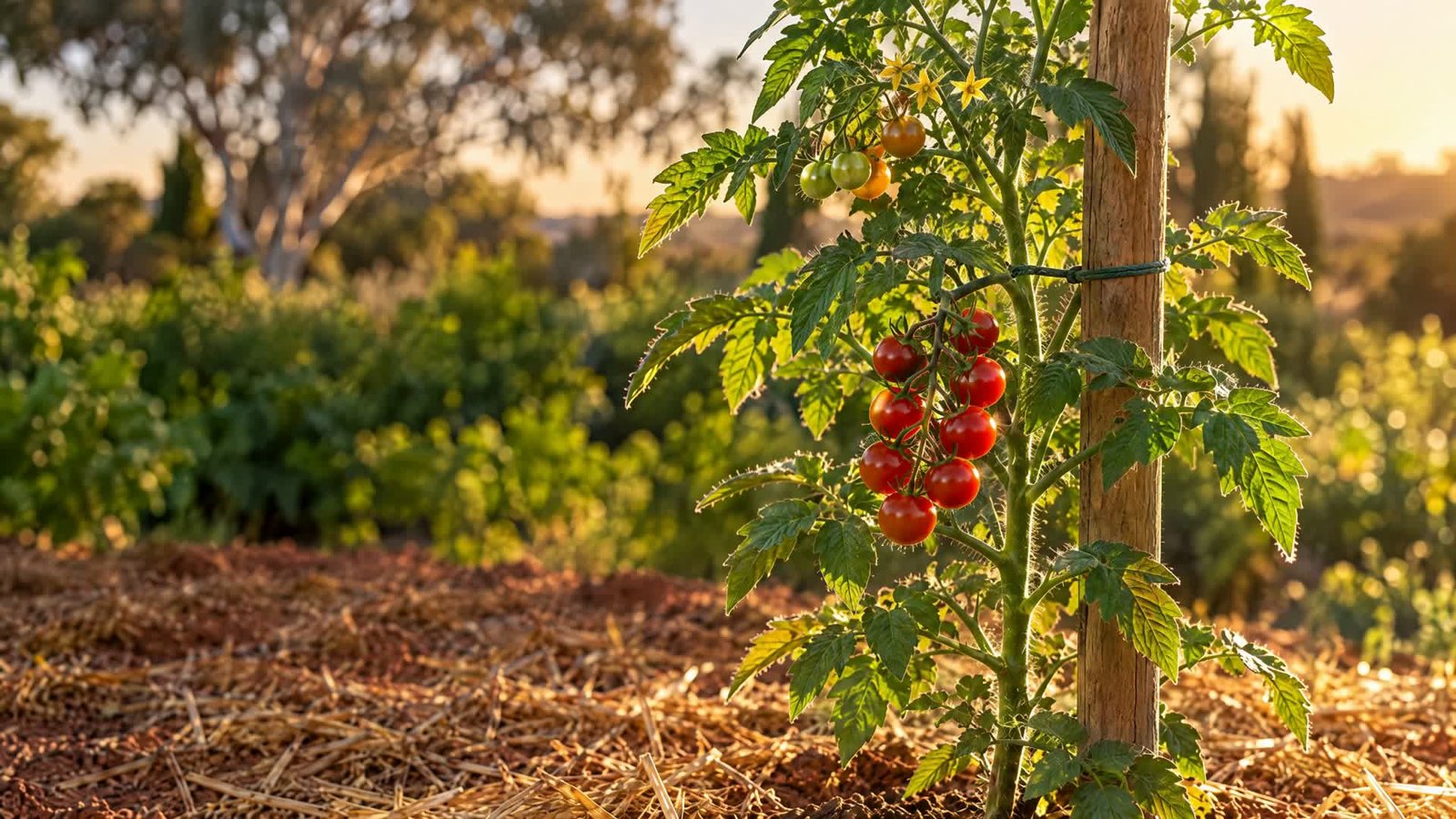
Cherry types like Tommy Toe and Sungold, plus romas and beefsteaks. Cherry tomatoes handle Swan Hill's heat far better than large-fruited types and keep setting fruit after the big ones stop.
Cherry types for heatWater deeply, not daily
Summer cropPlant Oct to Nov
Capsicum and chilli
One of the best crops for Swan Hill. Capsicum and chilli love the heat and do brilliantly in a Mallee summer: sweet capsicums, banana peppers and chillies of every heat level, producing well into autumn.
Loves the heatEasy grower
Summer cropPlant Sep to Nov
Cucumber
Fast and prolific: cucumbers love warm soil and long Mallee days. Plant early enough to get established before the worst heat, keep up the water, and you'll be picking within 8 weeks. Lebanese and long green types both do well here.
Ready in 8 weeksSteady water
Summer cropPlant Oct to Nov
Zucchini and squash
Probably the easiest summer crop in Swan Hill. Zucchini keeps producing through the heat with very little fuss and copes with dry spells once established. Butternut pumpkin and other squash suit Mallee conditions too.
Heat tolerantEasiest summer crop
Summer cropPlant Oct to Nov
Sweet corn
Swan Hill's hot, sunny summers suit sweet corn, and all that heat and sunshine makes it taste better. Plant it in blocks at least four by four, not in rows, so it pollinates well. It needs water but pays you back by January.
Loves the heatPlant in blocks
Summer cropPlant Oct to Nov
Eggplant
Like capsicum, eggplant is a tropical plant that does very well in a Swan Hill summer. Handsome leaves and a long harvest from January to May. One of the most reliable summer crops in a Mallee veggie patch.
Handles the heatLow maintenance
Winter cropPlant Mar to Apr
Broccoli and cauliflower
The workhorses of the Mallee winter garden. Plant in March or April and harvest from June to August. Don't plant them in spring: they bolt straight to flower in the October heat.
Frost tolerantAutumn only
Winter cropPlant Feb to Apr
Silverbeet and kale
Two of the most reliable producers for Swan Hill. Silverbeet handles frost and mild heat, so plant it in late summer for a harvest that runs right through winter. Kale gets sweeter after a frost. Both are forgiving and productive.
Frost hardyGood for beginners
Winter cropPlant Mar to May
Lettuce and Asian greens
Autumn and winter are the only reliable times for lettuce in Swan Hill: in summer heat it bolts and turns bitter almost at once. Loose-leaf types like oak leaf and butter lettuce hold up better than hearting types. Pak choi and bok choy are quick and easy through winter.
Quick harvestNever in summer
Winter cropPlant Apr to Aug
Peas and broad beans
Peas and broad beans love a Mallee winter. They handle frost and keep growing through June and July. Plant early, in April or May, so they're established before the coldest frosts, and you'll be picking in August and September.
Frost hardyEasy from seed or seedling
Winter cropPlant Mar to Apr
Cabbage and kohlrabi
Slow to grow but productive over a long winter harvest. Cabbages are very frost tolerant once established and can handle a Swan Hill June without cover. Kohlrabi is underrated, quick and delicious raw.
Frost tolerantPlant March, pick July
Winter cropPlant Apr to Jun
Onion and leek
Planted as seedlings in autumn, onions and leeks mature slowly through winter and spring for a harvest in November and December. Swan Hill's long, mild spring is ideal for bulking up onions before summer. Brown onions, red onions and leeks all do well.
Frost hardyLong harvest
HerbPlant Oct to Nov
Basil
Basil is a tropical plant and a Swan Hill summer suits it. Plant it in October and it takes off. Keep it watered, pinch off the flowers and it will produce right through to April. Don't try it in winter.
Loves the heatPinch the flowers
HerbYear round
Parsley
One of the most versatile herbs for Swan Hill. Parsley grows in the cool and warm seasons, though it's best not planted in the middle of summer. Italian flat-leaf handles heat better than curly. Give it some afternoon shade in January and February.
Year roundShade in summer
HerbsYear round
Chives, oregano and thyme
The Mediterranean herbs suit Swan Hill's hot, dry conditions with very little fuss. Oregano and thyme need almost no care once established and prefer poor, well-drained soil. Chives handle both frost and heat.
Drought tolerantVery low care