Native Plants for the Mallee | Rhimahden Plant Nursery Swan Hill

Native Plants · Swan Hill & the Mallee Region

Natives That
Belong Here.

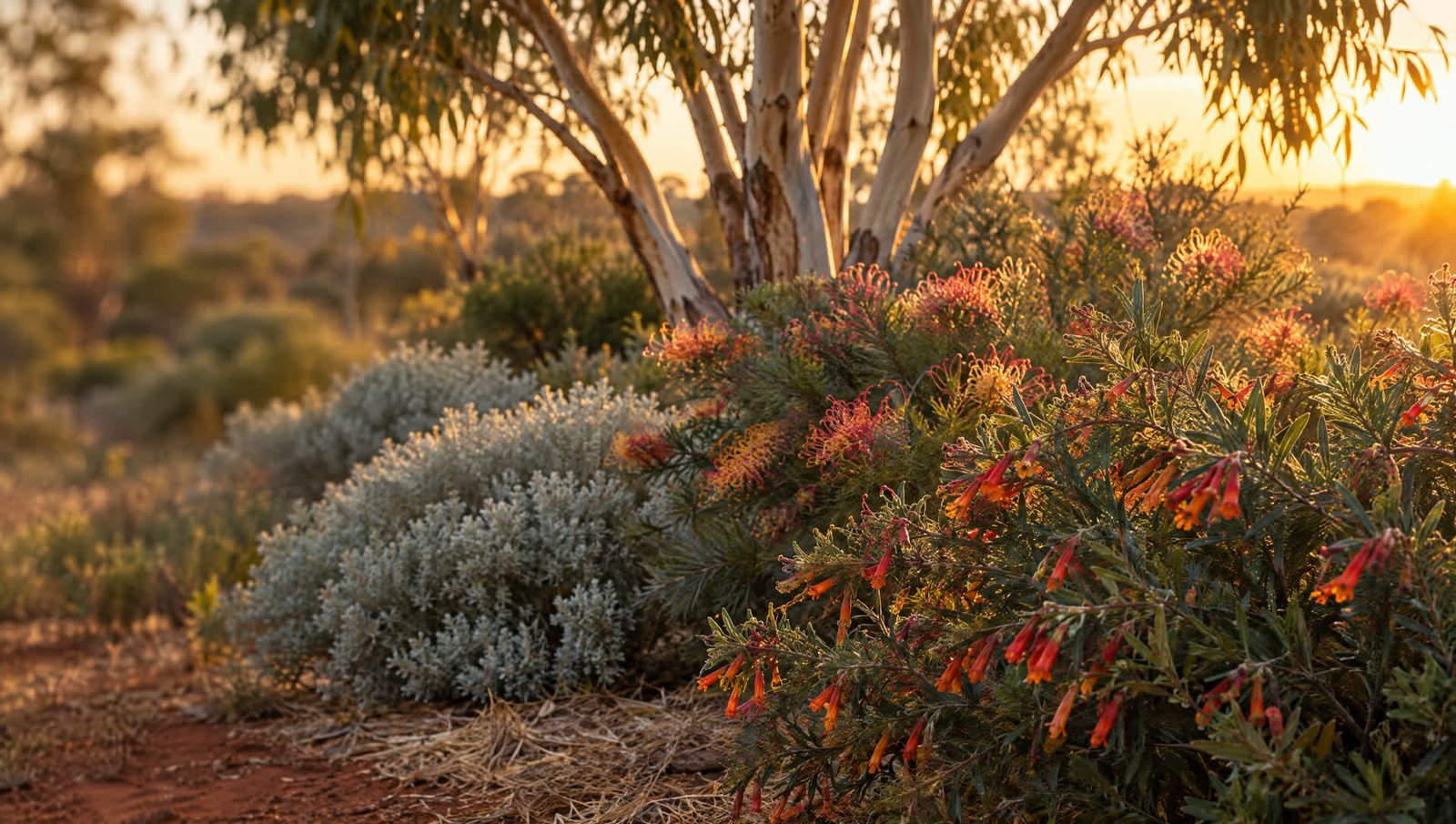
Every native we stock is chosen for where you actually live — the Mallee's hot summers, cold frosts, alkaline soils, and low rainfall. Not plants from a catalogue. Plants from people who grow in this country.

❄️ Frost Hardy 💧 Drought Tolerant 🦜 Wildlife Friendly 🧂 Salt Tolerant Options

Why Mallee Natives?

Plants That Know
This Country

The Mallee is a specific kind of place. Summers that regularly hit 40°C or above, frosts through June and July, annual rainfall averaging around 320mm, and soils that range from sandy to alkaline clay — with salinity affecting a significant number of gardens across the Swan Hill region.

Native plants evolved here — or in conditions very like here. They've developed deep root systems, waxy or grey foliage, lignotubers, and flowering cycles that align with Mallee seasons. When you choose the right native, you're working with the country, not against it.

Peta-Lyn and John have been growing natives on their property just out of Swan Hill since 1981. When they recommend a plant, it's because they've seen it succeed in the same conditions your garden faces.

☀️

Heat & Drought Proven

All our natives handle the Mallee summer. Many need no supplemental water once established — saving you time and money.

❄️

Frost Hardy

Swan Hill gets regular ground frosts. We only stock natives that won't die back in winter or need covering up.

🧂

Salt Tolerant Options

Salinity is a real problem for many Swan Hill gardens. We stock natives — like Eremophilas and Salt Paperbark — that handle it.

🦜

Wildlife Friendly

Honeyeaters, lorikeets, wrens, and native bees all rely on the right plants. Our range is chosen with them in mind too.

Browse the Range

Natives for the Mallee Garden

Filter:
🌿 Stock changes seasonally — not everything listed will be available year-round. Call 0429 437 024 to check →
River Red Gum
Native Tree 10–20 m
River Red Gum
Eucalyptus camaldulensis
The iconic tree of the Murray River and the Mallee. Stunning white-cream bark, spreading canopy, and remarkable resilience to drought, flood, and frost. A long-lived statement tree for large gardens or rural blocks.
💧 Drought Tolerant ❄️ Frost Hardy 🦜 Bird Attracting Mallee Icon
Red Ironbark eucalyptus
Native Tree 10–15 m
Red Ironbark
Eucalyptus sideroxylon
Deep, furrowed dark bark with spectacular pink to red flowers in autumn and winter — exactly when the garden needs colour most. Extremely drought tolerant and frost hardy. A favourite with honeyeaters and lorikeets.
💧 Drought Tolerant ❄️ Frost Hardy 🦜 Bird Attracting
Kurrajong tree
Native Tree 8–15 m
Kurrajong
Brachychiton populneus
One of the Mallee's most reliable shade trees. Stores water in its swollen trunk, making it extraordinarily drought hardy. Attractive cream and red-flecked bells in spring and summer. Excellent in heavy clay and alkaline soils.
💧 Drought Tolerant ❄️ Frost Hardy 🧂 Salt Tolerant
Australian woodland trees
Native Tree 6–10 m
Drooping Sheoak
Allocasuarina verticillata
Graceful weeping foliage that moves beautifully in the wind. An excellent windbreak and screen tree for exposed Mallee properties. Fast growing, extremely drought and frost hardy, and a favourite nesting tree for native birds.
💧 Drought Tolerant ❄️ Frost Hardy 🚀 Fast Growing 🦜 Bird Attracting
Grevillea red flowers
Grevillea 1–1.5 m
Grevillea 'Robyn Gordon'
Grevillea banksii × bipinnatifida
Possibly Australia's most popular garden Grevillea — and for good reason. Large red spider flowers virtually year-round, nectar-rich enough to attract honeyeaters daily. Responds brilliantly to a light post-flowering trim. A must for any Mallee bird garden.
💧 Drought Tolerant ❄️ Frost Hardy 🦜 Year-round Nectar
Pink native shrub flowers
Grevillea 1–2 m
Rosemary Grevillea
Grevillea rosmarinifolia
Fine rosemary-like foliage and masses of deep pink-red flowers from autumn through spring. One of the best Grevilleas for sheltering small birds — the dense prickly growth protects wrens and other small species from larger aggressive birds.
💧 Drought Tolerant ❄️ Frost Hardy 🦜 Shelters Small Birds
Low sprawling native shrub
Grevillea 0.3–1 m
Woolly Grevillea
Grevillea lanigera
A low spreading form with soft, silvery-grey foliage and a flush of pink and cream flowers in winter and spring. One of the most frost-hardy Grevilleas available — takes temperatures well below zero with no damage. Excellent as a ground cover on slopes and dry banks.
💧 Drought Tolerant ❄️ Very Frost Hardy 🌱 Ground Cover
Eremophila tubular flowers
Emu Bush 1–2 m
Spotted Emu Bush
Eremophila maculata
One of the best natives for Swan Hill's toughest gardens. Tubular red, orange or yellow flowers through winter and spring attract honeyeaters and spinebills. Handles saline soils, alkaline soils, frost, and extended drought. Available in several colour forms.
💧 Drought Tolerant ❄️ Frost Hardy 🧂 Salt Tolerant 🦜 Bird Attracting
Grey-leafed native shrub
Emu Bush 0.5–1.5 m
Common Emu Bush
Eremophila glabra
Striking grey-green foliage that reflects heat and reduces water loss — a perfect example of Mallee adaptation. Tubular flowers in red, orange or yellow. Handles full exposure, poor soil, saline conditions, and frost. Very low maintenance once established.
💧 Drought Tolerant ❄️ Frost Hardy 🧂 Salt Tolerant
Pink flowering native shrub
Emu Bush 1–1.2 m
Emu Bush 'Fairy Floss'
Eremophila hybrid
A showstopper hybrid Eremophila with masses of soft pink tubular flowers from late winter through spring. Silvery-grey foliage sets off the blooms beautifully. Proven in tough inland conditions, frost hardy, and reliably drought tolerant once established.
💧 Drought Tolerant ❄️ Frost Hardy 🦜 Bird Attracting
Red bottlebrush flowers
Bottlebrush 3–5 m
Weeping Bottlebrush
Callistemon viminalis
The classic bird-garden bottlebrush. Weeping branches smothered in brilliant red brushes in spring and again in autumn. Attracts lorikeets, honeyeaters, and spinebills in abundance. Frost hardy, drought tolerant once established, and suits both garden beds and large pots.
💧 Drought Tolerant ❄️ Frost Hardy 🦜 Lorikeet Favourite
Golden wattle yellow flowers
Wattle 3–6 m
Golden Wattle
Acacia pycnantha
Australia's floral emblem — and justifiably so. Cascading golden flower clusters in late winter and spring with an intoxicating scent. Fast growing, making it excellent for screening and windbreaks. Fixes nitrogen, improving soil for surrounding plants. Frost and drought hardy.
💧 Drought Tolerant ❄️ Frost Hardy 🚀 Fast Growing 🦜 Bird & Bee Friendly
Silver grey wattle shrub
Wattle 2–4 m
Flinders Range Wattle
Acacia iteaphylla
A superb mid-sized wattle from the arid Flinders Ranges — perfectly suited to Mallee conditions. Blue-grey foliage and pale yellow flowers in late summer and autumn. Outstanding drought and salt tolerance. A great screening shrub that won't give up in a tough summer.
💧 Drought Tolerant ❄️ Frost Hardy 🧂 Salt Tolerant
Grey green hedging shrub
Shrub 1–1.5 m
Coast Rosemary
Westringia fruticosa
Silver-grey foliage and a constant flush of small white flowers almost year-round. Extremely tough — handles wind, salt, drought, frost, and poor soils. One of the best native hedging plants available, and responds well to regular clipping into a formal or informal shape.
💧 Drought Tolerant ❄️ Frost Hardy 🧂 Salt Tolerant
Lomandra native grass clumps
Native Grass 50–60 cm
Lomandra 'Tanika'
Lomandra longifolia 'LM300'
One of Australia's toughest plants — full stop. This compact, fine-leafed form handles full sun, deep shade, drought, frost, waterlogging, and poor soils. Used widely in council plantings for good reason. Exceptional mass planting and border plant for the low-maintenance Mallee garden.
💧 Drought Tolerant ❄️ Frost Hardy 🌱 Mass Planting
Dianella flax lily with blue berries
Flax Lily 40–70 cm
Black-anther Flax Lily
Dianella revoluta
A Mallee indigenous species — found in the very country your garden sits in. Strappy blue-green foliage, sprays of blue-purple flowers in spring, and ornamental dark blue berries through summer and autumn. Brilliant under trees, on slopes, and in dry shaded spots.
💧 Drought Tolerant ❄️ Frost Hardy Mallee Indigenous
Melaleuca paperbark tree
Salt Specialist 3–8 m
Salt Paperbark
Melaleuca halmaturorum
The gold standard for highly saline conditions. Where few other trees will survive, the Salt Paperbark thrives — growing happily in seasonally waterlogged, salt-affected soils. Cream bottlebrush flowers attract birds and native bees. An essential plant for the saltiest Swan Hill gardens.
🧂 Highly Salt Tolerant ❄️ Frost Hardy 🦜 Bird Attracting
Silver-grey saltbush low shrub
Salt Specialist 1–2 m
Old Man Saltbush
Atriplex nummularia
One of the most salt-tolerant plants on earth — native to the driest, saltiest parts of Australia's interior. Silver-grey spreading shrub that's virtually indestructible once established. Superb for exposed, eroded, or saline areas where nothing else will grow. Also great bird and lizard habitat.
💧 Extreme Drought Hardy ❄️ Frost Hardy 🧂 Extreme Salt Tolerant

Getting it Right

Planting Natives in
the Mallee

🕳️

Plant in Autumn — Not Spring

Autumn planting (March–May) gives natives the best start in the Mallee. They establish root systems through the cooler, wetter months before facing their first hot summer. Spring planting puts young plants under immediate heat stress and requires far more watering to survive.

🍂

Mulch Deeply — 75mm Minimum

A thick mulch layer is one of the most important things you can do for a native in Mallee conditions. It retains soil moisture, regulates temperature, suppresses weeds, and gradually improves soil structure. Keep mulch a few centimetres away from the stem to avoid collar rot.

💧

Water Well at Planting, Then Pull Back

Water deeply at planting time and for the first two summers — then reduce gradually. The goal is to encourage deep root growth, not surface dependence. Most Mallee natives become genuinely drought hardy once established, but they need time to build that root system.

✂️

Prune Lightly After Flowering

A light tip prune after flowering keeps natives compact, encourages dense bushy growth, and promotes better flowering the following season. Avoid pruning back into old wood on Acacias and Grevilleas — always keep some green foliage on the sections you cut. Less is more.

Wildlife-Friendly Gardening

Bring the Mallee
Back to Your Garden

The Mallee was once alive with honeyeaters, lorikeets, pardalotes, and native bees. The right plant choices can bring a lot of that back — even in a suburban Swan Hill garden.

🦜

Nectar Feeders

Honeyeaters, lorikeets, and wattlebirds need a year-round nectar supply. Layer your planting so something is always in flower.

  • Grevillea 'Robyn Gordon' — year-round
  • Red Ironbark — autumn–winter
  • Weeping Bottlebrush — spring & autumn
  • Eremophila maculata — winter–spring
🐦

Small Bird Shelter

Wrens, thornbills, and pardalotes need dense, prickly cover to hide from larger birds and cats. Plant clumps of 5–7 together.

  • Grevillea rosmarinifolia — dense prickly cover
  • Drooping Sheoak — nesting habitat
  • Acacia iteaphylla — dense growth
  • Golden Wattle — seed and insect food
🐝

Native Bees & Insects

Native bees, beetles, and butterflies are critical pollinators. They need flowers, native grasses, and undisturbed ground. Don't over-tidy your garden.

  • Dianella revoluta — flowers & berries
  • Lomandra 'Tanika' — insect habitat
  • Golden Wattle — pollen-rich flowers
  • Westringia — constant flowering

Got a Salty Patch That Won't Grow Anything?

Salinity is one of the most frustrating problems in Swan Hill gardens — but it doesn't have to mean bare ground or dead plants. Peta-Lyn and John have dealt with saline soils on their own property for over 40 years. They know which plants will genuinely thrive in challenging conditions and which will struggle. Come in and have a chat — bring a soil sample if you've got one.

Talk to Us About Your Soil →

Open 7 Days

Not sure which
native to choose?

Come in and have a chat. Peta-Lyn and John have grown in this country for over 40 years — they'll help you find exactly the right plant for your conditions, your soil, and your garden.

Tue–Fri 9am–5:30pm  ·  Sat 9am–5pm  ·  Mon & Sun 10am–4pm