Thrives hereEvergreen
Citrus
Lemon, orange, mandarin, grapefruit
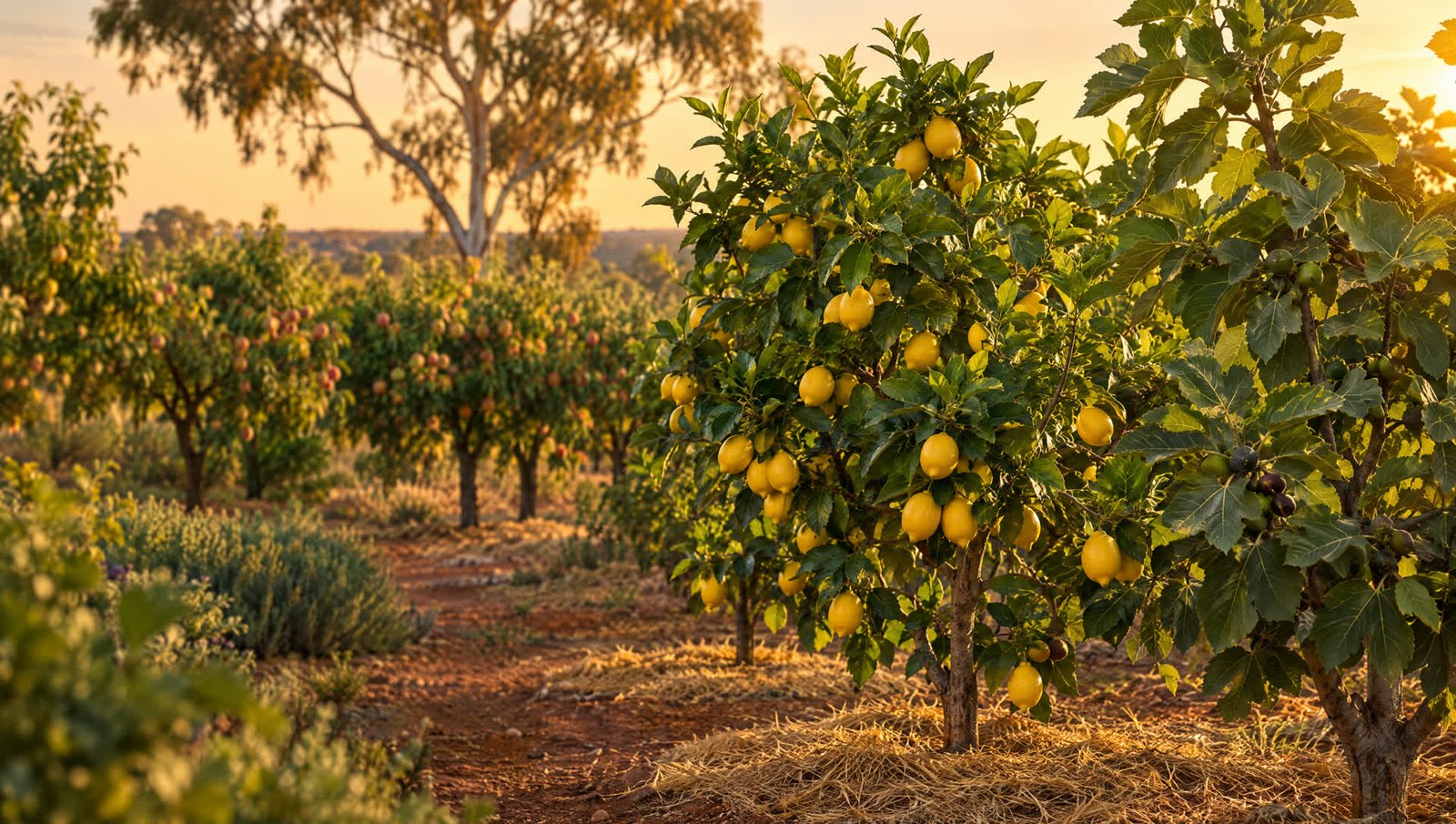
The safest bet in the Mallee. Hot, dry summers are exactly what citrus loves: the long season sweetens the fruit and dry air keeps disease down. Water regularly, mulch the root zone heavily and protect young trees from hard frost in their first winter. Self-fertile, so one tree is enough.
Try: Lisbon and Eureka lemons, Washington Navel orange, Emperor and Afourer mandarins, Ruby grapefruit.
Loves the heatYoung trees frost tenderSelf-fertile
Thrives hereFruit Nov to Feb
Stone fruit
Apricot, peach, nectarine, plum
Swan Hill is the home of Australia's stone fruit industry, and the orchards along the Murray Valley Highway grow the same fruit you can plant at home. Dry summers mean much less brown rot than in wetter parts of Victoria. Most apricots are self-fertile, so one tree gives a full crop.
Try: Moorpark, Trevatt and Goldrich apricots, Anzac peach, Fantasia nectarine, Mariposa and Santa Rosa plums.
Frost hardySalt on raised bedsBare root in winter
Thrives hereFruit Jan to Apr
Figs
Ficus carica
The Mallee's secret star. Drought tolerant, unfussy about soil and happiest in dry summer heat. Figs handle alkaline soil and moderate to high salt better than most fruit trees, and one self-fertile tree crops generously for very little work.
Try: Brown Turkey, Black Genoa, White Adriatic, Preston Prolific.
Salt tolerantDrought tolerantSelf-fertile
Thrives hereHarvest Apr to Jun
Olives
Olea europaea
Swan Hill is one of Australia's biggest olive oil producers, and the trees that grow commercially here do just as well at home. Silvery leaves, good shape even when they're not fruiting, and very drought tolerant once established. One of the most salt tolerant fruit trees of all.
Try: Kalamata, Frantoio, Manzanilla, Corregiola.
High salt toleranceLittle water once established
Thrives hereFruit Mar to May
Pomegranates
Punica granatum
Made for a climate like ours. They love full sun and dry heat, with scarlet flowers in spring and jewel-like fruit in autumn. Once established, a deep water once a week is enough even in summer, and they cope with alkaline and salty soil.
Try: Wonderful, Elche, Desertnyi.
Heat loverSalt tolerantWeekly water
Grows wellHarvest Feb to Mar
Almonds
Prunus dulcis
A backyard almond wants what the commercial farms here get: dry, hot summers, dry weather at flowering and moderate chill. Most almonds need a cross-pollinator, so plant two compatible varieties close together. Nonpareil and Carmel are the classic pair.
Try: Nonpareil, Carmel, Price, Chellaston.
Drought tolerant once establishedPlant two
Grows wellHarvest Apr to Jun
Quinces
Cydonia oblonga
One of the most underrated fruit trees for the Mallee. Hardy and drought tolerant, covered in pale pink blossom in spring, with golden, fragrant fruit for jam, paste and jelly. Self-fertile and low maintenance.
Try: Smyrna, Pineapple, Champion.
Moderate saltDrought tolerantSelf-fertile
Grows wellHarvest Feb to Apr
Asian pears and nashi
Pyrus pyrifolia
European pears can struggle with our chill hours, but Asian pears and nashi are more forgiving of warm winters. They give crisp, sweet fruit and pretty spring blossom, and suit the region with the right variety.
Try: Nijisseiki (20th Century), Hosui, Kosui.
Lower chillMay need a pollinator
Select varieties onlyHarvest Feb to May
Apples
Malus domestica
We'll be honest: most apples need more chill than Swan Hill reliably gets. Low-chill varieties bred for warm climates can do well here, though. You'll usually need two trees for pollination. Ask us which ones give you the best chance.
Try: Anna, Dorsett Golden, Gala.
Low-chill varietiesPlant two