Native shrub0.5 to 2 m
Emu bush
Eremophila species
One of the toughest plants in the Australian range. Eremophilas come from arid country and do well in exactly what Swan Hill gives them: scorching summers, cold winters, sandy alkaline soil and very little water. Red, pink, purple, lilac or yellow flowers, often in winter when little else is out. Honeyeaters love it.
Extremely drought hardyFrost tolerantBird attractingSalt tolerantMallee favourite
Native shrub0.3 to 4 m
Grevillea
Grevillea, various
There's a grevillea for almost every spot in a Mallee garden, whether you need a compact groundcover or a big screening shrub. The spider flowers bring honeyeaters all year. 'Scarlet Sprite', 'Robyn Gordon' and the tough prostrate forms handle heat, frost and dry soil easily. Good drainage is the one thing they insist on.
Drought hardyMost frost tolerantHoneyeater magnet
Native shrub1 to 2 m
Native rosemary
Westringia fruticosa
Grey-green leaves, soft white to pale mauve flowers and a very tough constitution. Takes full sun, frost, wind and long dry spells without complaint. A great low hedge, border shrub or informal screen, and far more forgiving in alkaline Mallee soil than the Mediterranean herb it's named after. Trim lightly after flowering.
Very drought hardyFrost tolerantFull sunHedging
Native tree5 to 8 m
Weeping myall
Acacia pendula
A medium-sized wattle native to inland Victoria and New South Wales, exactly the kind of country Swan Hill sits in. Long, silver-grey weeping branches, and it handles droughts and frosts that would finish other trees. Pale yellow flower balls in late winter and spring with a light, sweet scent. A beautiful feature tree or windbreak.
Extremely drought hardyFrost tolerantSalt tolerantWindbreak
Native tree8 to 15 m
Kurrajong
Brachychiton populneus
Its swollen trunk stores water to see it through drought. Glossy dark green leaves and bell-shaped flowers in summer. Aboriginal people valued it for food, fibre and shade. It grows naturally across inland eastern Australia and suits Swan Hill beautifully: a great shade tree for a big garden or a driveway.
Extremely drought hardyFrost tolerant once establishedFull sun
Native grass0.5 to 1 m
Lomandra
Lomandra longifolia and cultivars
Possibly Australia's toughest ornamental grass. It puts up with drought, frost, heat, heavy clay, sand, salt, fire and neglect. 'Tanika' and 'Katrinus Deluxe' make neat, arching clumps of fine leaves that look good with no fuss. Ideal for mass planting, edges and slopes.
Very drought hardyFrost tolerantSalt tolerantLow maintenance
Native shrub2 to 4 m
Purple hopbush
Dodonaea viscosa 'Purpurea'
A fast-growing screening shrub with deep bronze-purple leaves that look striking in the garden and in a vase, and papery seed pods in summer. Native to inland Australia and happy with frost, dry spells and alkaline soil. Great for hedges, windbreaks or as a bold contrast plant.
Very drought hardyFrost tolerantHedgingWindbreak
Native groundcover10 to 15 cm
Native creeper
Myoporum parvifolium
A vigorous, flat groundcover that spreads quickly to smother weeds and cover bare ground. Small white star-shaped flowers in spring and summer bring in native insects. Takes full sun and long dry spells once established. Great on slopes, banks and rockeries. The broad-leaf form is especially tough in the dry.
Drought hardyFrost tolerantFull sunWeed suppressing
Native groundcover20 to 30 cm
Yellow buttons
Chrysocephalum apiculatum
Cheerful golden-yellow pom-pom flowers almost all year on a spreading mat of silvery-grey leaves. One of the best drought tolerant groundcovers for the Mallee: the silver leaves reflect sunlight and cut moisture loss. Fills gaps, edges paths and covers dry banks, and handles frost and poor soil easily.
Very drought hardyFrost tolerantLong flowering
Native shrub or small tree3 to 5 m
Weeping bottlebrush
Callistemon viminalis
Brilliant crimson bottlebrushes on gracefully weeping branches. Handles heat, drought and frost once established, and copes with poorly drained or slightly salty soil better than many plants. A favourite feeding tree for honeyeaters and lorikeets, and a lovely feature tree or informal screen.
Drought hardy once establishedFrost tolerantBird attractingSome salt tolerance
Introduced shrub0.5 to 1.2 m
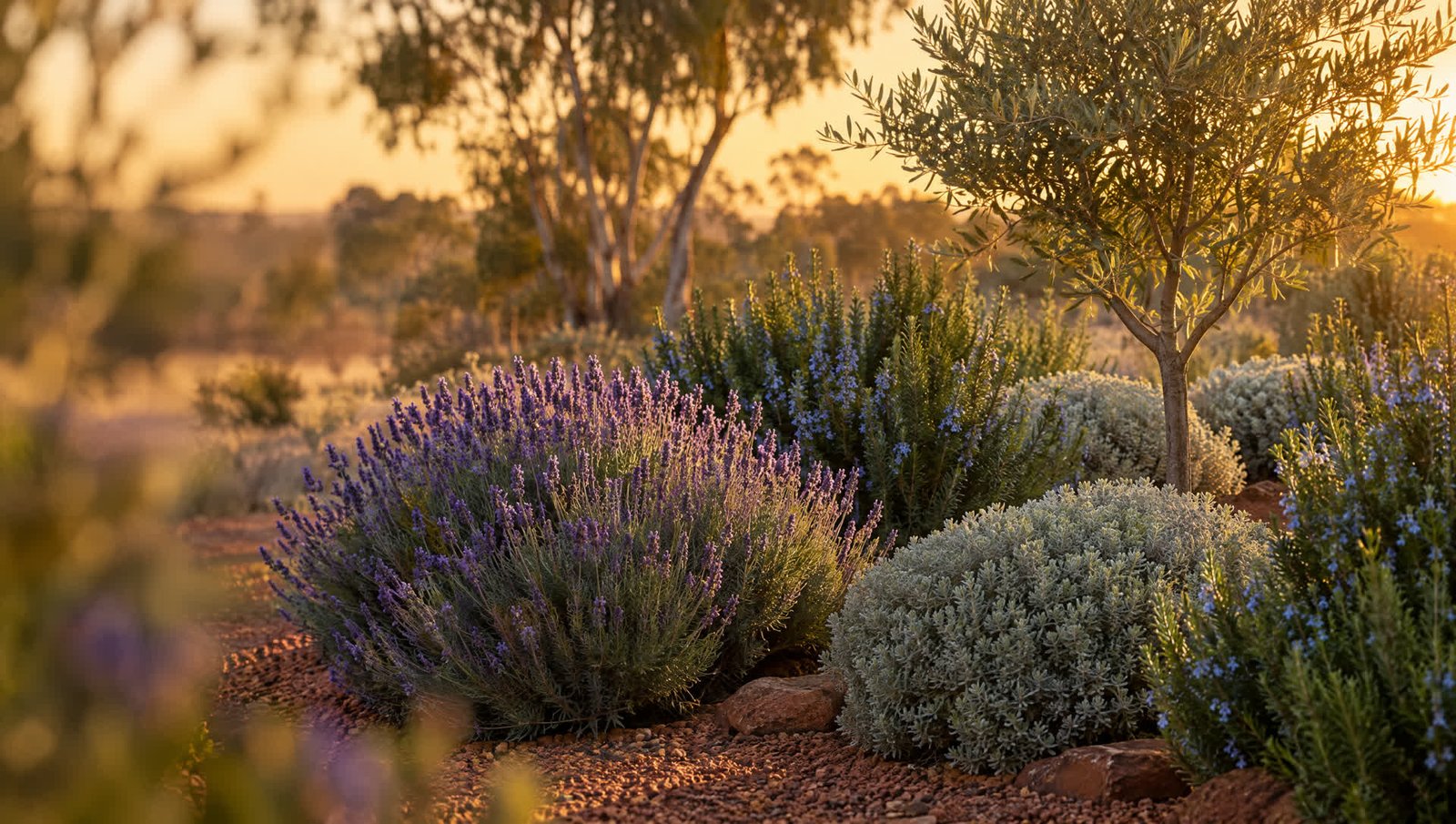
Lavender
Lavandula species
A Mediterranean plant that could have been designed for Swan Hill. Deep roots find moisture well below the surface, silvery leaves reflect the summer sun, and it loves lean, alkaline, well-drained soil. Spanish lavender (L. stoechas) and English lavender (L. angustifolia) both do well. Fragrant, frost tolerant and loved by bees. Plant it in the driest, sunniest spot you have.
Very drought hardyFrost tolerantFull sunBees love itMallee favourite
Introduced shrub0.5 to 1.8 m
Rosemary
Salvia rosmarinus
Drought tolerance and a kitchen herb in one plant. Rosemary comes from rocky Mediterranean coasts with almost no summer rain, poor soil and blazing heat, and it loves that. In Swan Hill it does well with very little care once established. Evergreen and fragrant, with blue flowers the bees adore. Upright and trailing forms make a low hedge, border or feature.
Very drought hardyFrost tolerantCulinary herbHedging
Introduced tree4 to 8 m, can be pruned
Ornamental olive
Olea europaea
One of the most drought resistant trees in the world. Olives evolved in the dry Mediterranean and need almost no extra water once established. Silvery-grey leaves look good all year against Swan Hill's bright skies. A great specimen tree, a large pot plant or the centre of a Mediterranean-style garden. Check local council advice on fruiting varieties.
Extremely drought hardyFrost tolerant once establishedFull sun
Introduced perennial0.9 to 1.2 m
Russian sage
Perovskia atriplicifolia
Tall, airy spikes of lavender-blue flowers over silver-grey, aromatic leaves from summer into autumn. Stunning mass planted or as a backdrop. It comes from the Central Asian steppes, where summers are fierce and rain is scarce, so it suits the Mallee well. Cut it back hard in late winter. Lovely with agapanthus, grasses and native shrubs.
Very drought hardyFrost tolerantPollinator friendly
Introduced perennial0.5 to 1 m
Agapanthus
Agapanthus species
Bold blue or white globes of flowers in summer, tough strappy leaves all year, and almost no care once settled. It comes from South Africa, another hot, dry climate with frost, and handles Swan Hill summers well once established. Great massed along a driveway or fence line. Dwarf types such as 'Storms River' and 'Peter Pan' suit small spaces. Choose sterile cultivars so it doesn't seed.
Drought tolerant once establishedFrost tolerantLow maintenance
Introduced shrub0.6 to 1.5 m
Rock rose
Cistus species
Paper-thin, crinkled flowers in white, pink and crimson on one of the toughest shrubs for hot, dry, rocky ground. Cistus grows wild on Mediterranean hillsides and needs almost nothing from you once established. Good in rockeries and on slopes, anywhere you want colour without water. Takes light frost; protect young plants in their first winter.
Very drought hardyLight frost onlySummer flowers
Introduced perennial0.6 to 1.2 m
Red hot poker
Kniphofia species
Dramatic torch-like spikes of red, orange and yellow from a South African grassland plant. It handles Mallee heat and frost well, likes well-drained soil and hates being overwatered. Bold colour through summer and autumn, and a magnet for honeyeaters. Plant it in full sun and leave it be.
Drought tolerantFrost tolerantFull sunBird attracting
Introduced perennial or shrub0.5 to 1.5 m
Ornamental salvia
Salvia, various
Salvias include some of the toughest and prettiest flowering plants around. Mexican bush sage (Salvia leucantha), 'Hot Lips' and S. greggii give months of colour on very little water once established. They like full sun and sharp drainage. Many are frost tolerant, but some need a sheltered spot in a cold Swan Hill winter, so ask us which suits your garden.
Drought tolerantFull sunPollinator magnetLong flowering